Network & Cloud Projects
SD-WAN Migration
MPLS to SD-WAN network transformation for a freight forwarder with multiple remote sites.
Project Profile
A global freight forwarding company operating 20 branch offices in China, experienced increasing network congestion and high operational costs due to its centralized MPLS architecture. All remote offices were required to route traffic through the Shanghai data center, creating significant bandwidth bottlenecks and limiting the deployment of new collaboration systems such as Cisco Webex video conferencing. The objective of this project was to modernize the network architecture by migrating from a fully centralized MPLS topology to a hybrid SD-WAN architecture, improving performance, reducing cost, and enabling local internet access for branch offices.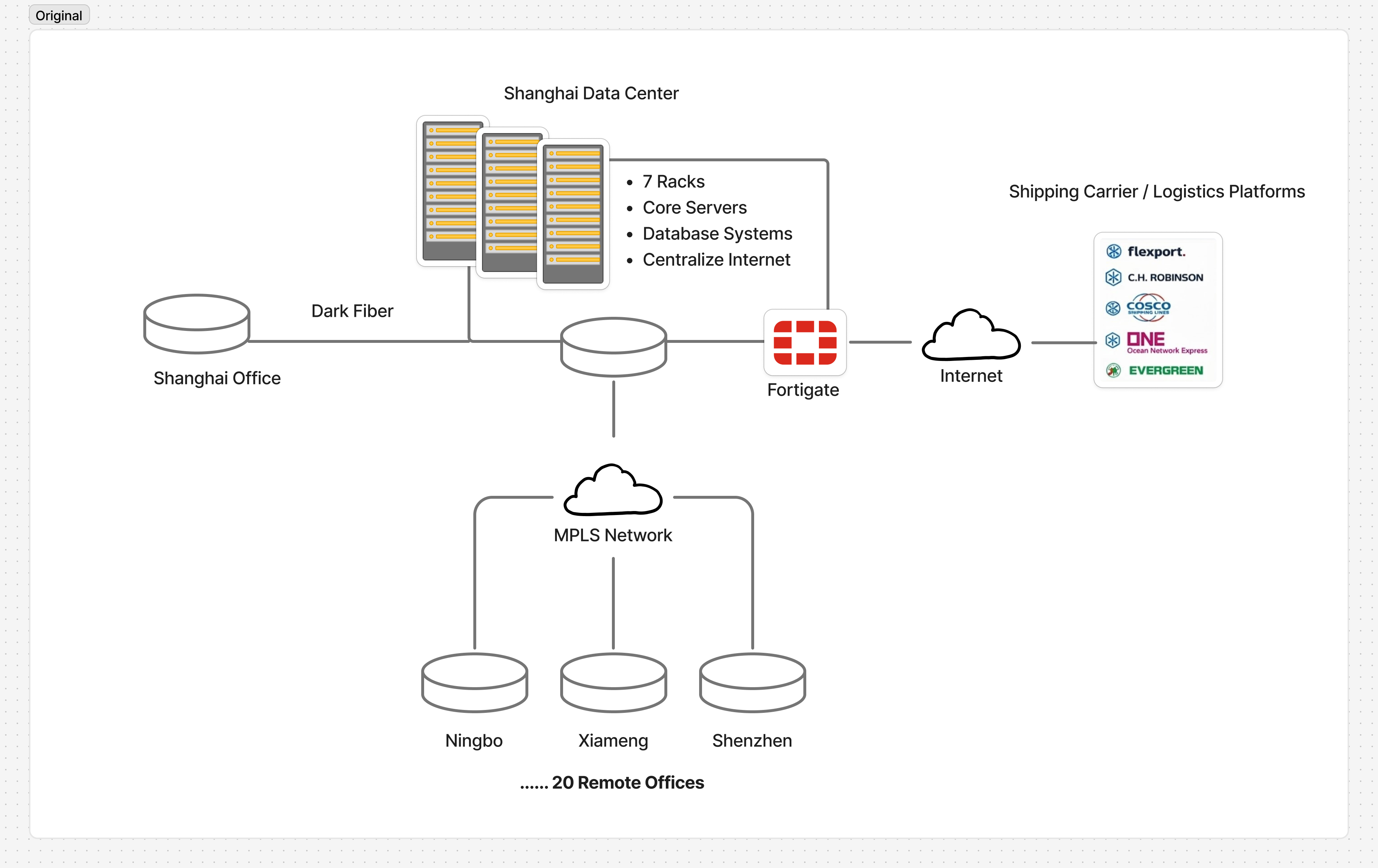
Customer Pain Points
MPLS Bandwidth Bottleneck
High MPLS Cost
Lack of Local Internet Access due to centralized security controls
Solution
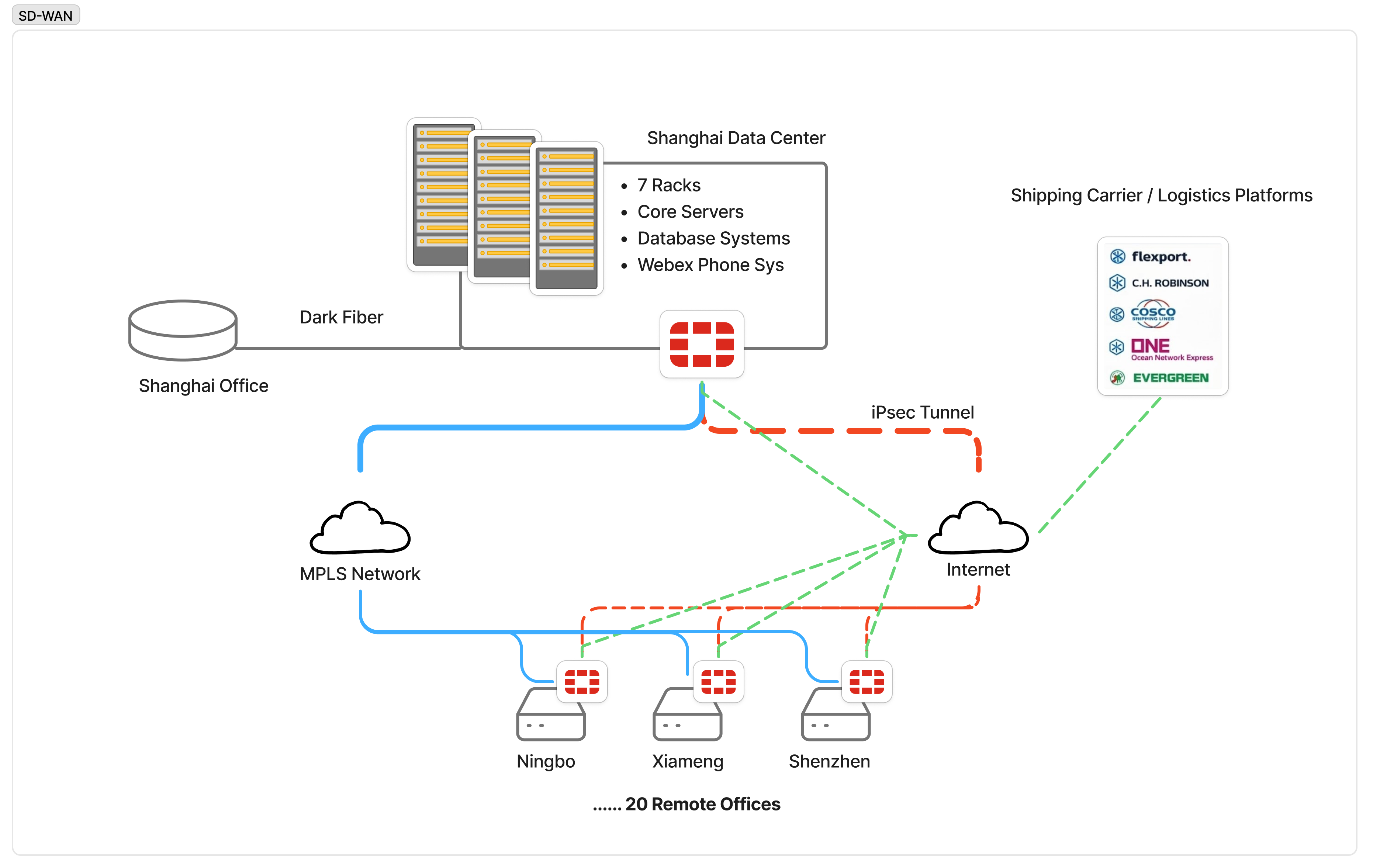
Deploy FortiGate firewall at each remote office
Maintain MPLS for critical traffic
Use IPsec VPN over internet for non-critical traffic
Enable local internet breakout
IP-Transit
IP Transit Connectivity Enhancement Project
Project Profile
The customer is a leading mobile network operator in Hong Kong, serving approximately 3.5 million mobile subscribers across the territory. Due to rapid growth in mobile data traffic and increasing cross-border internet usage, the operator experienced capacity bottlenecks and latency issues in its existing connectivity with China networks and international upstream carriers. To improve network resilience, routing flexibility, and international connectivity performance, the operator initiated an IP Transit upgrade project.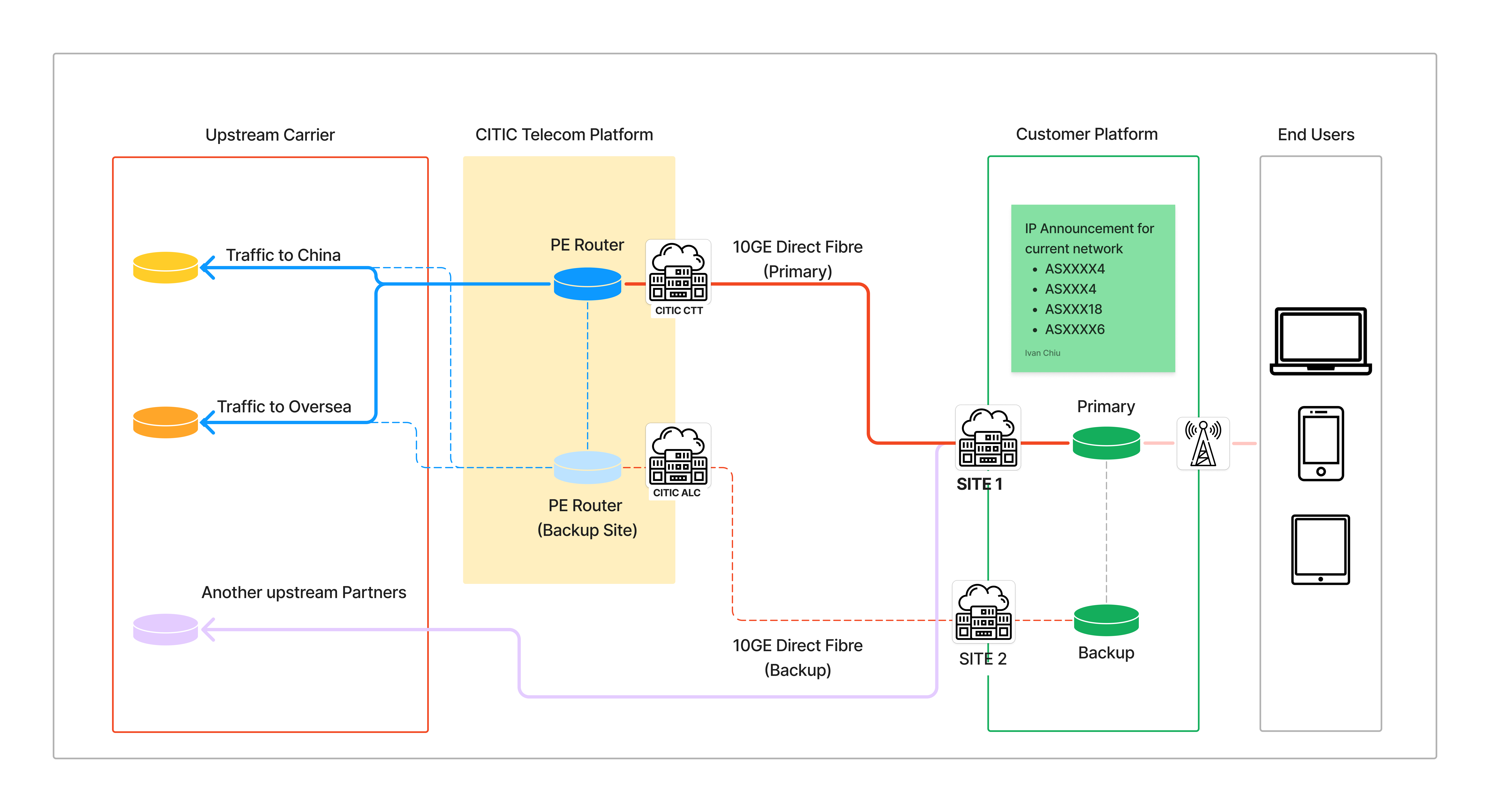
Project Objective
Increase international internet capacity
Eliminate congestion between Hong Kong and overseas networks
Improve routing efficiency and latency for China and international traffic
Enhance network resilience through redundant transit paths
Solution Overview
Deploy dual-path 10Gbps IP Transit connectivity to ensure high availability.
IP Prefix advertisement to upstream carriers
Route optimization for international and China-bound traffic
Cloud
Hybrid Cloud Solution
Project Profile
Customer is a leading provider of integrated logistics solutions for the fashion industry in China. With the rapid growth of fashion e-commerce and retail logistics operations, the company requires high availability, reliable data protection, and scalable IT infrastructure to support its warehouse management and logistics systems.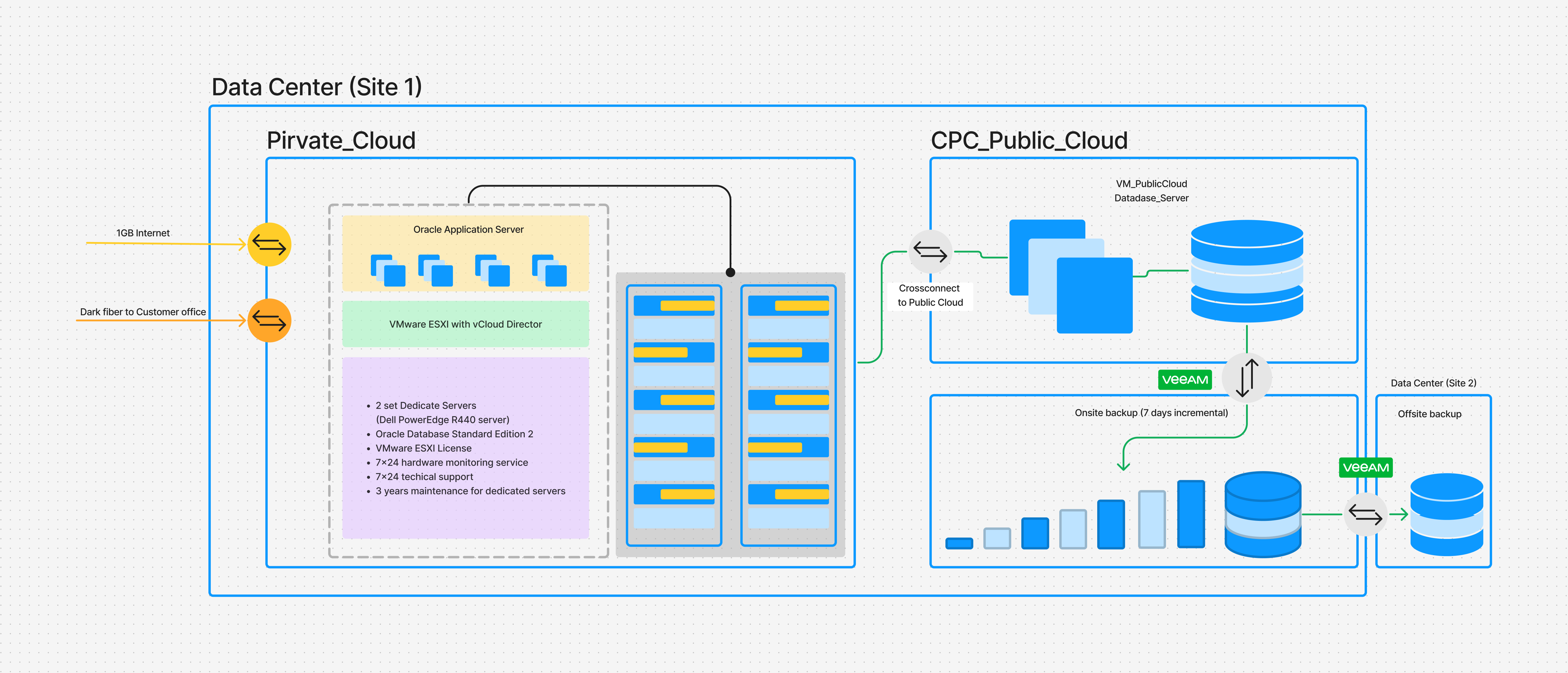
Challenges
The current Oracle license cannot be migrated directly to the public cloud.
All systems must comply with the company's "3+2+1" backup policy.
Improve routing efficiency and latency for China and international traffic
24×7 availability requirement
Project Objective
Hybrid Cloud Infrastructure
Virtualized compute environment using VMware ESXi
Data protection using Veeam Backup & Replication
24×7 monitoring and support services with 3+2+1 backup strategy
Supply Chain & EDI
EDI Migration
Project Profile
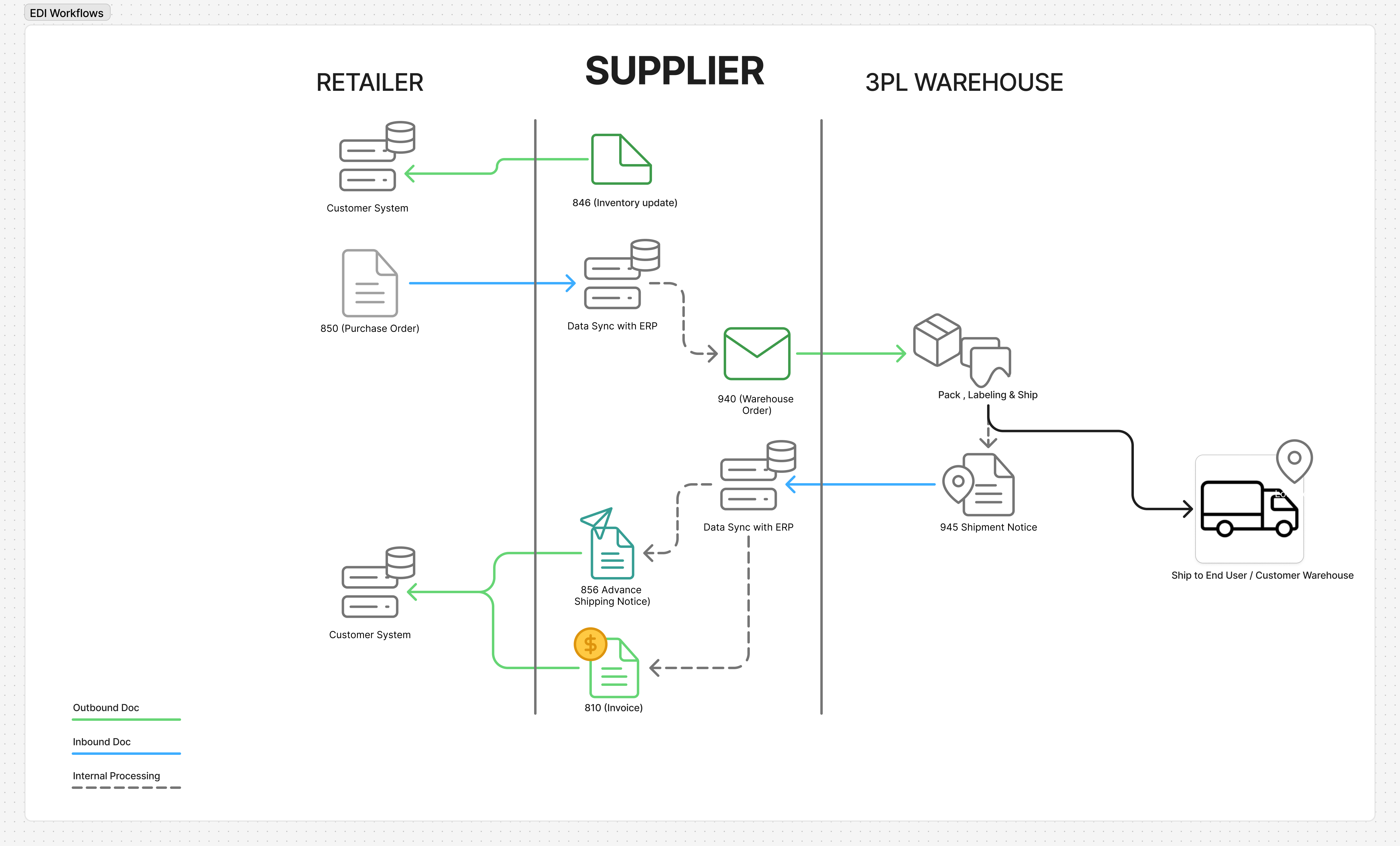
Implement EDI integration with a new retail partner to enable automated and reliable electronic document exchange between the retailer, supplier ERP system, and warehouse management system (WMS). The integration will support the end-to-end order lifecycle including purchase order processing, inventory visibility, warehouse fulfillment, shipment notification, and invoicing, using standardized EDI transactions.Electronic Data Interchange (EDI) is a critical component for modern trading and e-commerce operations. It allows trading partners to exchange business documents electronically in standardized formats, eliminating manual data entry and improving transaction speed, accuracy, and operational efficiency.
For high-volume retail and e-commerce channels, EDI supports automated order processing, real-time inventory visibility, faster warehouse fulfillment, accurate shipment notifications, and automated invoice transmission. In modern omnichannel retail environments, EDI provides scalable and standardized system-to-system communication that helps reduce manual errors, improve service levels, and meet retailer compliance requirements.
Data Flow Overview
Retailer → Supplier → Warehouse → Supplier → Retailer
- Supplier (We) sends 846 Inventory Advice as required
- Retailer sends 850 Purchase Order
- Supplier (We) sends 855 Purchase Order Acknowledgment
- Supplier (We) converts order details into 940 Warehouse Shipping Order
- Warehouse processes picking, labeling, and shipping
- Warehouse sends 945 Warehouse Shipping Advice after the product is shipped.
- Supplier (We) generates and sends 856 Advance Ship Notice (ASN) with tracking information.
- Supplier (We) sends 810 Invoice to Retailer
Implementation Activities
Planning
- Define project requirements with retailer and internal stakeholders
- Confirm document standards, mandatory fields, packing standards , label requirements and business rules
- Define integration architecture between EDI platform, ERP, and WMS
Mapping & Development
- Configure EDI mappings for 850, 860, 997, 846, 855, 856, 810, 940, and 945
- Develop integration between EDI platform and retailer system (AS2 or SFTP)
- Develop integration between supplier ERP and warehouse management system
- Configure packing list and shipping label templates based on retailer requirements
Testing
- EDI Connectivity Testing
- Document Mapping Validation
- Unit Testing
- Warehouse Integration Testing
- End-to-End Order Flow Testing / UAT (User Acceptance Testing)
Deployment
- Prepare production cutover plan
- Execute go-live migration to production environment
- Monitor initial transactions and resolve post-go-live issues
Major Retailers
AI Chat Bot with LangChain & Gradio
Use LangChain & OpenAI LLM module to call OpenAI and display response.
Tools: Gradio + OpenAI API
Project Profile
This project is a lightweight AI chatbot application built using LangChain, Gradio, and the OpenAI API. It provides an interactive web-based chat interface where users can input prompts and receive intelligent responses powered by a Large Language Model (LLM).please click here to access this project in my github
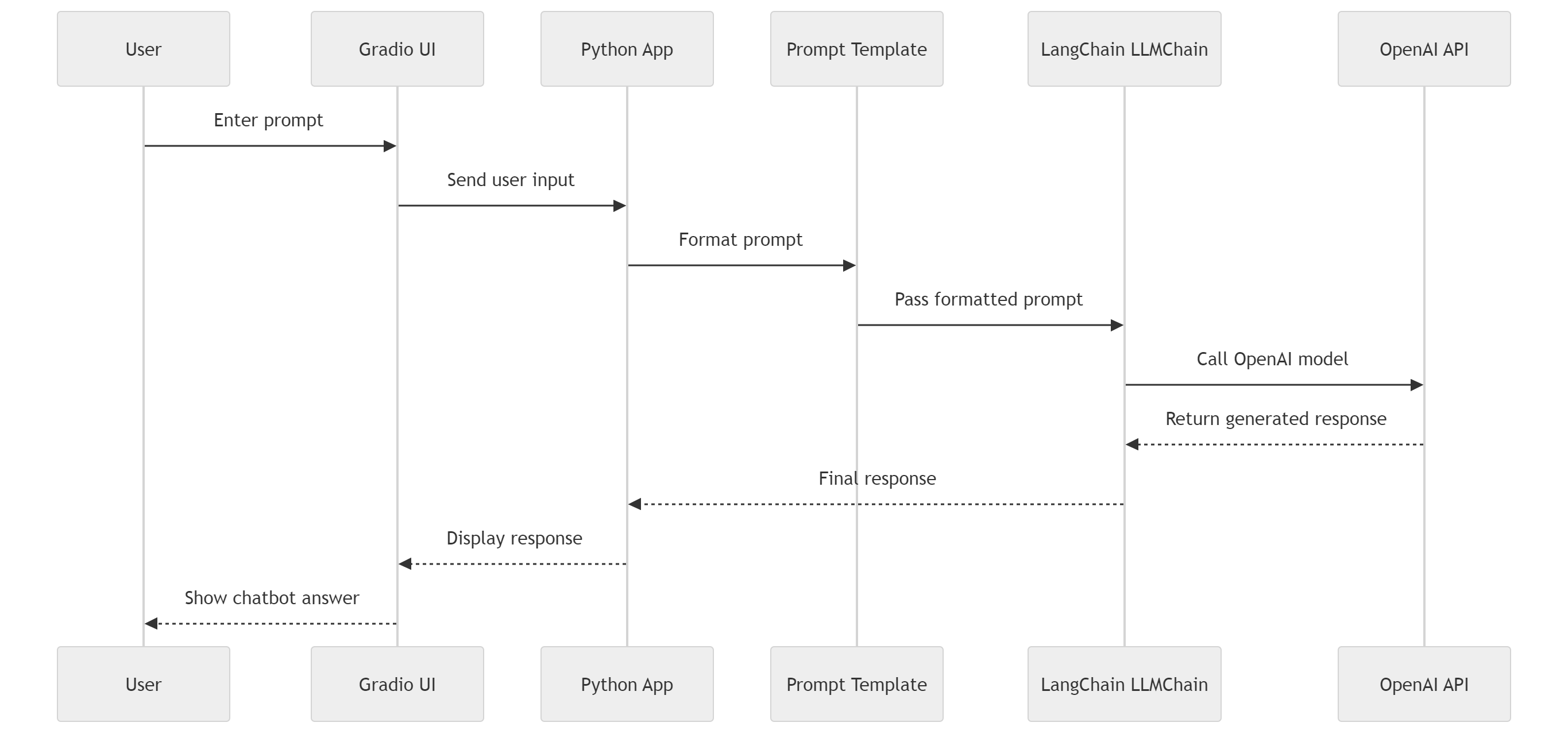
Interactive chatbot UI using Gradio
LLM integration via OpenAI API
Modular pipeline using LangChain
Prompt templating for structured input
Chat with PDF Application (AI & RAG)
Project Profile
The application uses a Retrieval-Augmented Generation (RAG) architecture to ensure the LLM answers are based only on the uploaded PDF document.
This project is a PDF Chat Application that allows users to:
- Upload a PDF document
- Ask questions in natural language
- Receive answers generated by an AI model
- View source page references
Tools: LangChain + Gradio + OpenAI API
please click here to access this project in my github
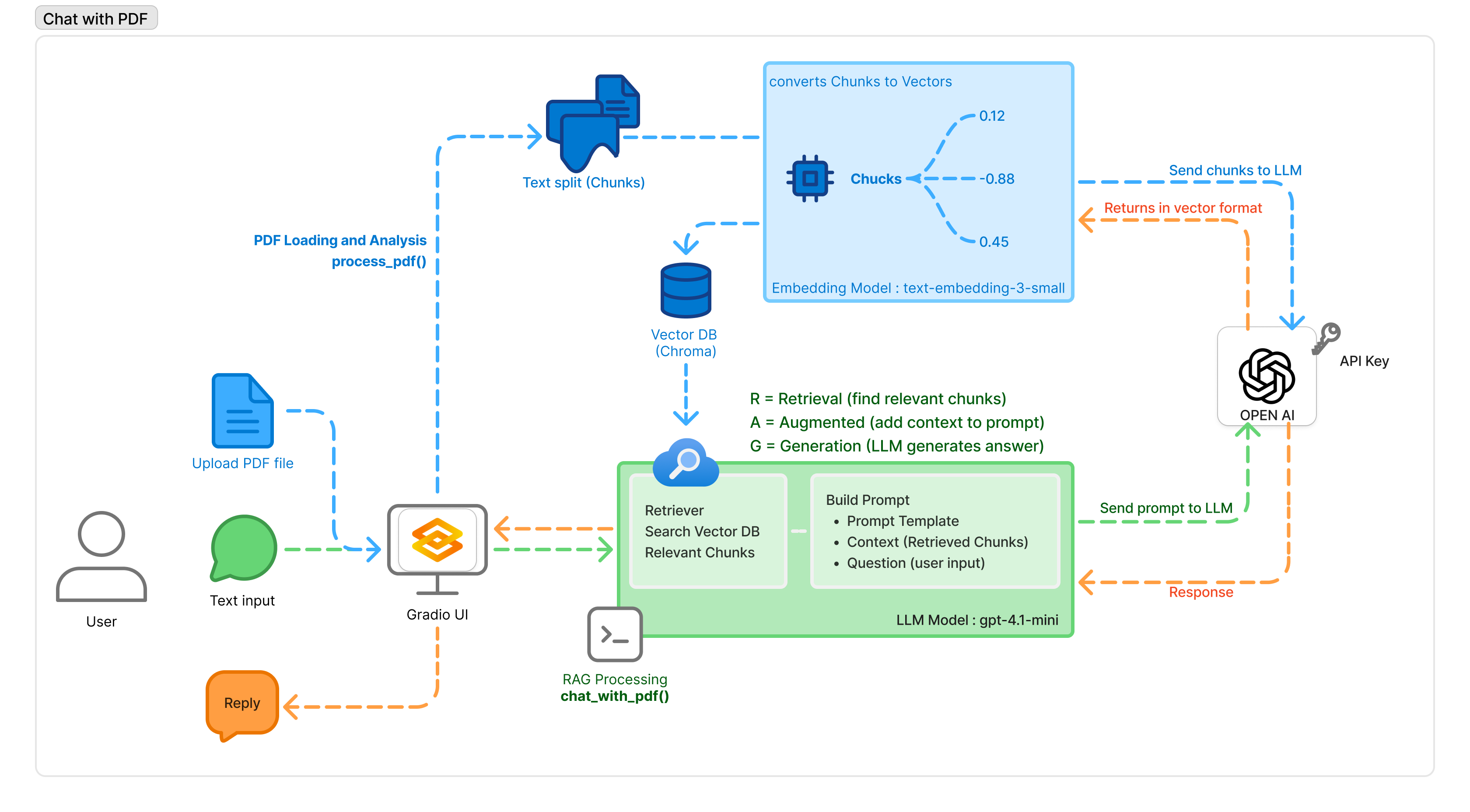
How it Works
load PDF using PyPDFLoader
Split text into chunks
Convert chunks into vector format & store in vector database (Chroma)
Question and Answering (RAG processing)
Retrieve relevant information from Chroma
Use Prompt Template with contect and question to build up Prompt
Generate answer using LLM
Powered by Ivan Chiu